
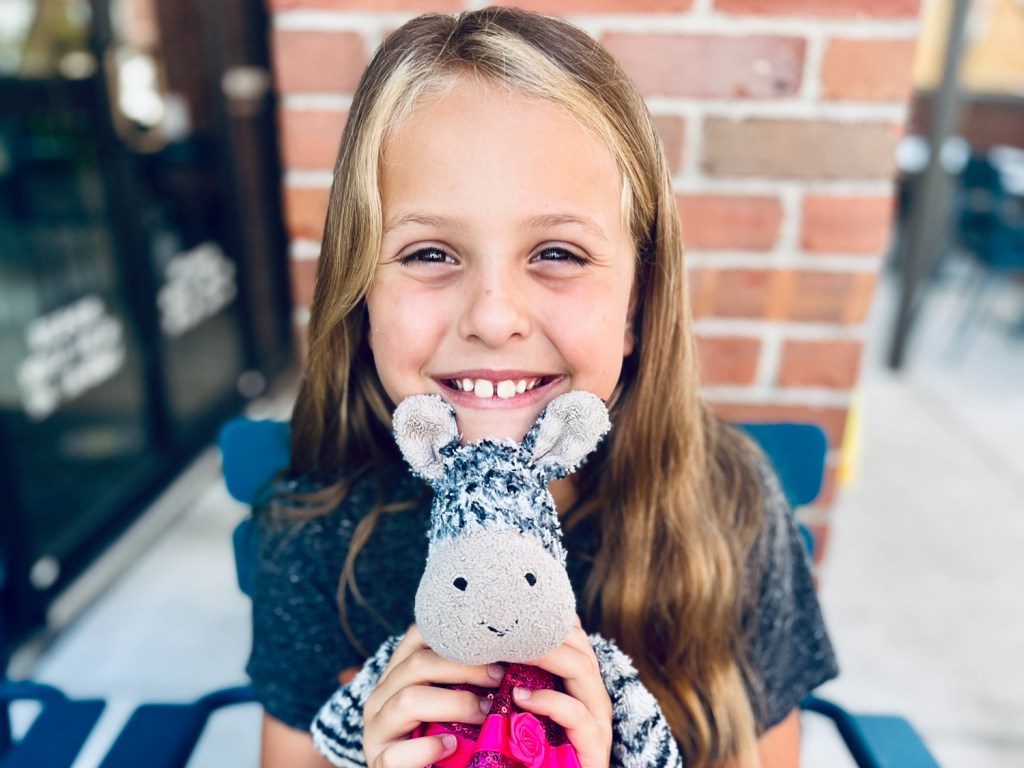
Livvy had been to more than one therapist, to no avail because she’d just shut down and refuse to talk or even participate in play therapy. My mother had begun researching disorders and wondered if she had Oppositional Defiance Disorder because it seemed to fit to a degree but I wasn’t sold on that. We were going to start the process to have her evaluated for ODD, when I joined a support group online for parents of explosive children. I just needed to talk with and be supported by other parents who could relate to what we were experiencing. I poured out my heart in a long post, crying the entire time. Of course lots of people commented, offering their sympathy and opinions about what the cause was but none of it made any sense to me. There was one woman, however, who posted a link and said it sounded like I should check it out. At first, I ignored it because there were so many opinions that I was overwhelmed but out of the blue one day, I thought, just take a look, Jennifer. What’s the harm?
I clicked on the link, began to read and within a couple of minutes, I had chills and began to wail, alone in my bathroom with the shower running and steam filling the room. This was it. This was the answer we’d been seeking for over 3 years. There was no doubt in my mind that she was autistic with a PDA profile. I cannot describe how bittersweet that revelation was to me because, while I was sure I had my answer and we could begin the process of a diagnosis and addressing the condition, it meant that my daughter was autistic and that it drastically changed our family in an instant. It meant that Livvy’s life would forever be shaped by PDA autism and I still had little knowledge about it but I knew enough to understand that it was monumental. I was still terrified, just a different kind of terrified.
You might be thinking that I got too far ahead of myself, considering that we didn’t have a diagnosis but mothers know their kids like no one else. With every ounce of my being, I knew I was right. I began to immerse myself in PDA research. I read every medical journal, every article, books and every bit of information on every PDA website I could find and with each bit that I consumed, I was even more certain of my conclusion. I also began the process of finding a psychologist who was qualified to evaluate Livvy, which was a daunting task because at that time, just three years ago, there were very few in the United States. While PDA is gaining recognition and awareness all over the country now, back then it was still virtually unheard of by psychologists, medical doctors and counselors, let alone the general public. The waiting lists to acquire appointments with the only psychologists who were PDA knowledgeable and experienced were months-long. I decided on a fantastic psychologist in Chicago (because I couldn’t find anyone in Oklahoma) who could do the evaluation through multiple videoconference interviews with Livvy and I, endless questionnaires, review of school records and videoconference interviews with her teachers. It took two months to get the initial appointment and then another month or so of the evaluation process and at the end, we received a 30 page document with charts, graphs and detailed explanations of every assessment given, including how she scored on the autism spectrum rating scales. Her autism spectrum score was in the 99th percentile, which was obviously about as high as you can get, regardless of how verbal and seemingly typical she looked and acted (on the surface anyway). I should point out that, even though the doctor was able to give us an autism diagnosis, the PDA aspect of it could only be a confirming evaluation, not a diagnosis because in the U.S. it hasn’t been studied long enough to be a diagnosable disorder. The U.K. and Australia have been diagnosing PDA for a few years but sadly, we lag behind those countries on this front.
However, with this information, I was able to give Livvy’s school the explanation it needed for her many absences and tardies. By that point, I’d been instructed to do my best to get Livvy to school, no matter her behavior and that they’d take care of it from there. You see, most of the school staff had no idea what we were dealing with and assumed we just had a behavior issue or possibly a child with serious separation issues. Livvy’s teachers were a different story and I thank God for them because they believed my diagnosis, even before I had it in hand and they bent over backwards to help us. They could see my pain, were incredibly kind and patient and when I delivered the official diagnosis and they initiated the process of getting Livvy on a 504 plan for us. From that point on, the entire staff did everything it could to accommodate Livvy’s needs and things began to improve significantly. Unfortunately, this is not the outcome for hundreds of other families (who are aware their child has PDA) because more often than not, school staff is reluctant to accept it as a form of autism and refuse to make the necessary accommodations to help these kids. Often times, parents have to beg, plead and fight with school officials for long periods of time, with no support and no positive outcomes. When I think back to my state of mind during that period of time, knowing the resistance and added stress other parents are facing from their school systems, I feel unbelievably blessed but also incredible despair for those who are so much less fortunate than us in this way. Most PDA kids wind up eventually either homeschooling (which often times winds up failing miserably) or “unschooling” as they call it because the traditional school environment is far too taxing for them and becomes a soul-killer. Until very recently, I’ve never even considered homeschooling because Livvy simply can’t mask her feelings with me at home, so within minutes, attempts to help her with school work trigger full meltdowns. I’m learning, however, that there are now fully online, interactive, engaging curriculums that remove the need for a parent to be the “teacher,” which could work but I just don’t know. I’d still need to help her at times and provide some kind of structure for each day, which is tricky but again, I have no idea if she’d even be able to work at home better than she can at school. When Livvy is there, she’s typically able to mask her feelings enough to get through her day, but she is now entering her last year of elementary school and the peer dynamics are changing, just as interactions with school staff will change accordingly with a group of kids who’ll be tweens. I will not be able to keep her in public school after this year because socially and emotionally, she is behind her peers and I have no doubt that bullying would come into play in the intermediate school environment. In addition, her anxiety seems to be increasing as we go along I don’t believe private school in general would be any different, with the exception of one in particular that’s more equipped to educate kids like Livvy. One issue with that is of course, the cost but I really don’t even know if she’d feel any different about it. As for now, she’s doing alright with peers at school for the most part and even has some sweet friends who handle her well, though there are some very challenging days. Academically, Livvy has fallen behind because she’s simply not there enough to receive the instruction she needs. Because of that, her confidence in her abilities has diminished considerably, which adds to the problem. Still, I’m hopeful. I’m not sure what we’ll do going forward but we’ve gotten this far against all odds, so I have to believe we can figure out a solution.
To be continued next Tuesday. Please join me back here for the rest of our PDA/autism story.


 Beautiful Mess Blog